6 Nov 2016

Book Review / Tragidoodles by Ben Cameron


Ben Cameron’s tragidoodles have been hailed as “the most upsetting doodles in the world” (Mirror) and as the work of “an artist with a knack for pulling on the internet’s heartstrings” (Buzzfeed).

This first-ever printed collection brings together Ben’s most popular, heartbreaking, bittersweet and endlessly witty cartoons, combining his viral creations with brand new, never-before-shared illustrations. Flip through and witness the dinosaurs’ final moments on Earth, a melting candle facing its all but certain demise, a hedgehog who’s just looking for love, an existential bear and a host of other creatures who are just trying to make it through the day.

Packed with 101 illustrations that will make you sad, make you laugh, and then make you feel bad for laughing, Tragidoodles is a must-have collection and the perfect Christmas gift.


Published:     3rd November 2016
Publisher:  Unbound
Goodreads :  Click here
Series or Stand-Alone:  Stand-Alone
Source:  Review Copy from Publisher


MY REVIEW

Despite the tragic nature of this book, it really was great fun to read and adore the doodles and the pictures are that, doodles.  There's nothing complicated about the pictures, I appreciated them for what they were and the messages they stood for.   For me, not all of the doodles were tragic.  Some were sad and some just made me laugh out loud.  

This would be a great book to pick up as a gift, especially for Christmas as it is just around the corner :-)


3 Nov 2016

Month in Review / October 2016

My reading for October has been a lot more relaxed than other months but with the books that I chose to read they really deserved to be read at a slower pace than I usually do.  If I had to pick a favourite for this month I would really struggle to choose just one.  For starters I finished the Ransom Canyon series, which I loved and can't believe that it's over! There needs to be more in that series!  Then there is The Day I Lost You which was truly heartbreaking with a very interesting twist to it.   The other favourite of mine was Apprentice in Death.  Even though I didn't start from book 1 in this series (which is something I nearly never do) I have loved every instalment I have been able to get my hands on.  One of these days I will start from book 1 but as this is a series that has over 43 books in it,  that may take a while!

BOOKS READ


BOOKS RECEIVED
 

GOOD PEOPLE
It's late 1938. Thomas Heiselberg has built a career in Berlin as a market researcher for an American advertising company.

In Leningrad, twenty-two-year-old Sasha Weissberg has grown up eavesdropping on the intellectual conversations in her parents' literary salon.

They each have grand plans for their lives. Neither of them thinks about politics too much, but after catastrophe strikes they will have no choice.

Thomas puts his research skills to work elaborating Nazi propaganda. Sasha persuades herself that working as a literary editor of confessions for Stalin's secret police is the only way to save her family.
When destiny brings them together, they will have to face the consequences of the decisions they have made.


EVERYWHERE I LOOK
Spanning fifteen years of work, Everywhere I Look is a book full of unexpected moments, sudden shafts of light, piercing intuition, flashes of anger and incidental humour. It takes us from backstage at the ballet to the trial of a woman for the murder of her newborn baby. It moves effortlessly from the significance of moving house to the pleasure of re-reading Pride and Prejudice.

Everywhere I Look includes Garner's famous and controversial essay on the insults of age, her deeply moving tribute to her mother and extracts from her diaries, which have been part of her working life for as long as she has been a writer. Everywhere I Look glows with insight. It is filled with the wisdom of life.


SAINT DEATH

A potent, powerful and timely thriller about migrants, drug lords and gang warfare set on the US/Mexican border by prize-winning novelist, Marcus Sedgwick.

Anapra is one of the poorest neighbourhoods in the Mexican city of Juarez - twenty metres outside town lies a fence - and beyond it - America - the dangerous goal of many a migrant. Faustino is one such trying to escape from the gang he's been working for. He's dipped into a pile of dollars he was supposed to be hiding and now he's on the run. He and his friend, Arturo, have only 36 hours to replace the missing money, or they're as good as dead. Watching over them is Saint Death. Saint Death (or Santissima Muerte) - she of pure bone and charcoal-black eye, she of absolute loyalty and neutral morality, holy patron to rich and poor, to prostitute and narco-lord, criminal and police-chief. A folk saint, a rebel angel, a sinister guardian.


HAUNT ME
Joe wakes up from a deep sleep to see his family leave in a removals van. Where they've gone, he has no idea. Erin moves house and instantly feels at home in her new room. Even if it appears she isn't the only one living in it. Bit by bit, Erin and Joe discover that they have somehow found a way across the ultimate divide - life and death. Bound by their backgrounds, a love of poetry and their growing feelings for each other, they are determined to find a way to be together.

Joe's brother, Olly, never cared much for poetry. He was always too busy being king of the school - but that all changed when Joe died. And when an encounter in the school corridor brings him face to face with Erin, he realises how different things really are - including the kind of girl he falls for.

Two brothers. Two choices. Will Erin's decision destroy her completely, or can she save herself before she is lost forever?


2 Nov 2016

Cover Reveal / The Beauty by Lindsay Mead


Can love thrive in a kingdom of secrets?

Rumors of King Aleksander abound, sowing seeds of fear and doubt among the populace. Worse, there’s only so much Belle can do to repair the damage caused by the former Bishop’s fear-mongering. With challenges and new enemies threatening, the couple will have to prove the strength of their love.

Of course, a cure for the king and his cursed people could solve everything. It may be as simple as reaching out to the right scientists, or maybe it’s all beyond the ingenuity of man. Tensions mount as old foes refuse to stay dead and unexpected revelations leave the future uncertain. But ultimately, it’s the half-truths that could lead to heartbreak.

The Beauty is the second book in The Hunter Legends, a re-imagining of the infamous love between a beauty and a beast.

1 Nov 2016

Book Review / IT by Stephen King


To the children, the town was their whole world. To the adults, knowing better, Derry, Maine was just their home town: familiar, well-ordered for the most part. A good place to live.

It was the children who saw - and felt - what made Derry so horribly different. In the storm drains, in the sewers, IT lurked, taking on the shape of every nightmare, each one's deepest dread. Sometimes IT reached up, seizing, tearing, killing . . .

The adults, knowing better, knew nothing.

Time passed and the children grew up, moved away. The horror of IT was deep-buried, wrapped in forgetfulness. Until they were called back, once more to confront IT as IT stirred and coiled in the sullen depths of their memories, reaching up again to make their past nightmares a terrible present reality.


Published:     15th September 1986
Publisher:  Hodder & Stoughton
Goodreads :  Click here
Series or Stand-Alone:  Stand-Alone
Source:  Owned


MY REVIEW

What I loved about this story...   IT has been a story that I have loved for years but have only followed it by watching the movie.  I cannot tell you the amount of times I have watched it, it must be going into triple digits now.  The one thing I realised that I hadn't done is actually read the book and I know exactly why I haven't.  At 912 pages long, with the font smaller and closer together than usual, I found this book to be very daunting to read; not to mention heavy to hold for long periods of time.  I decided to pick this up as an audio book and I am so happy that I did.   The audio book was narrated by Steven Weber and although I am not an expert in audio books, Steven Weber by far was the best narrator I have ever listened to.

What I love and have loved since the very first time I watched the movie is the main characters, watching them form a bond when they were children and watching them coming back together after nearly 30 years apart but seeming like time has never flown by.  Friendship conquers all, including evil...

What I didn't like about this story...   What I didn't like is probably the very thing that stopped me from wanting to pick up the book to read it in the first place - the length of the book.  This story is incredibly long with masses of description in every scene.  I don't know whether the fact that I watched the movie first has affected by perspective on this but I just felt that a lot of the descriptions were really unnecessary.  If this book was cut down to a 500 page book, losing some of the description, it would still be fantastic, in my opinion. 


Book Review / Reckoning by Magda Szubanski


 Heartbreaking, joyous, traumatic, intimate and revelatory, Reckoning is the book where Magda Szubanski, one of Australia’s most beloved performers, tells her story.

In this extraordinary memoir, Magda describes her journey of self-discovery from a suburban childhood, haunted by the demons of her father’s espionage activities in wartime Poland and by her secret awareness of her sexuality, to the complex dramas of adulthood and her need to find out the truth about herself and her family. With courage and compassion she addresses her own frailties and fears, and asks the big questions about life, about the shadows we inherit and the gifts we pass on.

Honest, poignant, utterly captivating, Reckoning announces the arrival of a fearless writer and natural storyteller. It will touch the lives of its readers.


Published:     23rd September 2015
Publisher:  Text Publishing
Goodreads :  Click here
Series or Stand-Alone:  Stand Alone, Non-Fiction
Source:  Review Copy from Publisher

 
 MY REVIEW

I have to be honest and say that I had never heard of Magda until reading this book.  The main reason for wanting to read it was the description on the back.  It sounded like Magda was an interesting person to read about and I was right, she is.  

What I found the most fascinating is actually the story of her childhood and her family, especially her father's story.   I also liked the fact that despite Magda being a comedienne her story was not always told with a hint of humour, there are sad parts, happy parts etc..

This was an interesting read that I would highly recommend to both those who have heard of Magda and for those who haven't.  I am definitely going to be checking out more of her work.


Magda Szubanski is one of Australia’s best known and most loved performers. She began her career in university revues, then appeared in a number of sketch comedy shows before creating the iconic character of Sharon Strzelecki in ABC-TV’s Kath and Kim. She has also acted in films (Babe, Babe: Pig in the City, Happy Feet, The Golden Compass) and stage shows.

>>>>>>>>>>>>>>>> 

In conversation about her new memoir Reckoning on:

Wednesday 2 November @ 19:00 Waterstones Brighton
Tickets: £5

Thursday 3 November @ 19:00
Tickets: £5

Saturday 5 November @ 16:00
In conversation with Georgina Godwin, Books Editor, Monocle 24
Tickets: £12-15

Monday 7 November @ 18:30
Tickets: £5

31 Oct 2016

GUEST POST / Andrew Joyce


Yellow Hair documents the injustices done to the Sioux Nation from their first treaty with the United States in 1805 through Wounded Knee in 1890. Every death, murder, battle, and outrage written about actually took place. 

The historical figures that play a role in this fact-based tale of fiction were real people and the author uses their real names. Yellow Hair is an epic tale of adventure, family, love, and hate that spans most of the 19th century. This is American history.


ABOUT THE AUTHOR


Andrew Joyce left high school at seventeen to hitchhike throughout the US, Canada, and Mexico. He wouldn’t return from his journey until decades later when he decided to become a writer. Joyce has written five books, including a two-volume collection of one hundred and fifty short stories comprised of his hitching adventures called BEDTIME STORIES FOR GROWN-UPS (as yet unpublished), and his latest novel, YELLOW HAIR. He now lives aboard a boat in Fort Lauderdale, Florida, with his dog, Danny, where he is busy working on his next book, tentatively entitled, MICK REILLY.

GUEST POST


My name is Andrew Joyce and I write books for a living. Debra has been kind enough to allow me a little space on her blog to talk about my latest, Yellow Hair.
Yellow Hair documents the injustices done to the Sioux Nation from their first treaty with the United States in 1805 through Wounded Knee in 1890. Every death, murder, battle, and outrage depicted actually took place—from the first to the last. The historical figures that play a role in my story were real people and I used their real names. I conjured up my protagonist only to weave together the various events conveyed in my fact-based tale of fiction. Yellow Hair is an epic tale of adventure, family, love, and hate that spans most of the 19th century. It is American history.
The inspiration for the book came to me when I was reading a short article and it made reference to the Great Sioux Uprising of 1862. It also mentioned that the outcome involved the largest mass execution in the history of the United States. That piqued my interest.

When I started my research into the incident, one thing led to another and before I knew it, I was documenting the entire history of the Sioux, who are also known as the Dakota, vis-à-vis the relationship between them and the United States.

Because the book exists only because I read the phrase, “the largest mass execution in the history of the United States,” I’ll tell you a little about that. What follows is an extremely abbreviated version of events.

The Dakota signed their first treaty with the United States in 1805 when they sold a small portion of their land to the Americans for the purpose of building forts. It was right after the Louisiana Purchase and President Jefferson wanted a presence in the West. At the time, “the West” was anything on the western side of the Mississippi River.

In the treaty of 1805, the Dakota sold 100,000 acres to the Americans. The agreed-upon price was $2.00 per acre. But when the treaty came up before the Senate for ratification, the amount was changed to two cents per acre. That was to be a precursor for all future treaties with the Americans. There were subsequent treaties in 1815, 1825, 1832, 1837, and 1851, and basically the same thing happened with all those treaties.

In 1837, the Americans wanted an additional five million acres of Dakota land. Knowing it would be a hard sell after the way they failed to live up to the letter or spirit of the previous treaties, the government brought twenty-six Dakota chiefs to Washington to show them the might and majesty that was The United States of America.

The government proposed paying one million dollars for the acreage in installments over a twenty-year period. Part of the payment was to be in the form of farm equipment, medicine, and livestock. Intimidated, the Indians signed the treaty and went home. The United States immediately laid claim to the lands—the first payment did not arrive for a year.

The significance of the 1837 treaty lies in the fact that it was the first time “traders” were allowed to lay claim to the Indians’ payments without any proof that money was owed . . . and without consulting the Indians. Monies were subtracted from the imbursements and paid directly to the traders.

By 1851, the Americans wanted to purchase all of the Dakota’s remaining lands—twenty-five million acres. The Sioux did not want to sell, but were forced to do so with threats that the army could be sent in to take the land from them at the point of a gun if they refused the American’s offer.

“If we sell our land, where will we live?” asked the Dakota chief.

“We will set aside land for the Dakota only. It is called a reservation and it will be along both banks of the Minnesota River, twenty miles wide, ten on each side and seventy miles long. It will be yours until the grasses no longer grow,” answered the Commissioner of Indian Affairs.

The Dakota were offered six cents an acre for land that was worth at least a dollar an acre. The payment would be stretched out over a twenty year period and was to be made in the form of gold coins. One year later, in 1852, the Americans took half the reservation, the seventy miles on the north side of the river. The Dakota were now reduced from a nation of fierce, independent people to a people dependent on hand-outs from the ones who stole not only their land, but also their dignity.

The Dakota were forced to buy their food from the traders who ran trading posts at the Indian Agency the U.S. Government had set up on the reservation. All year long the Dakota would charge what they needed. When the yearly payment for their land arrived, the traders would take what they said was owed them. Subsequently, there was very little gold left for the Dakota.

By 1862, the Dakota were starving. That year’s payment was months late in arriving because of the Civil War. The traders were afraid that because of the war there would be no payment that year and cut off the Dakota’s credit. The Indian Agent had the power to force the traders to release some of the food stocks, but refused when asked to do so by the Dakota.

After they had eaten their ponies and dogs, and their babies cried out in the night from hunger, the Dakota went to war against the United States of America.

They attacked the agency first and liberated the food stock from the warehouse, killing many white people who lived there. Then bands of braves set out to loot the farms in the surrounding countryside.

Many whites were killed in the ensuing weeks. However, not all of the Dakota went to war. Many stayed on the reservation and did not pick up arms against their white neighbors. Some saved the lives of white settlers. Still, over 700 hundred whites lost their lives before the rebellion was put down.

When the dust settled, all of the Dakota—including women and children, and those people who had saved settlers’ lives—were made prisoners of war.

Three hundred and ninety-six men were singled out to stand trial before a military commission. They were each tried separately in trials that lasted only minutes. In the end, three hundred and three men were sentenced to death.

Even though he was occupied with the war, President Lincoln got involved. He reviewed all three hundred and three cases and pardoned all but thirty-eight of the prisoners.

On a gray and overcast December morning in 1862, the scaffold stood high. Thirty-eight nooses hung from its crossbeams. The mechanism for springing the thirty-eight trap doors had been tested and retested until it worked perfectly. At exactly noon, a signal was given, a lever pulled, and the largest mass execution to ever take place in the United States of America became part of our history.


29 Oct 2016

Book Review / Apprentice in Death by JD Robb

Lieutenant Eve Dallas returns in a fast-paced new novel from #1 New York Times bestselling author J. D. Robb.
 
Nature versus nurture...
 
The shots came quickly, silently, and with deadly accuracy. Within seconds, three people were dead at Central Park’s ice skating rink. The victims: a talented young skater, a doctor, and a teacher. As random as random can be.

Eve Dallas has seen a lot of killers during her time with the NYPSD, but never one like this. After reviewing security videos, it becomes clear that the victims were killed by a sniper firing a tactical laser rifle, who could have been miles away when the trigger was pulled. And though the locations where the shooter could have set up seem endless, the list of people with that particular skill set is finite: police, military, professional killer.

Eve’s husband, Roarke, has unlimited resources—and genius—at his disposal. And when his computer program leads Eve to the location of the sniper, she learns a shocking fact: There were two—one older, one younger. Someone is being trained by an expert in the science of killing, and they have an agenda. Central Park was just a warm-up. And as another sniper attack shakes the city to its core, Eve realizes that though we’re all shaped by the people around us, there are those who are just born evil...


Published:     6th September 2016
Publisher:  Piatkus
Goodreads :  Click here
Series or Stand-Alone:  Book 43, Apprentice in Death
Source:  Review Copy from Publisher


MY REVIEW

What I loved about this story...  Despite breaking my cardinal rule over and over again with this series where I always start a series with the first book and never start half way through, this is a series you can definitely dip in and out of anywhere you want.  As with the previous two books in this series, I just loved dipping back into the world of Lieutenant Eve Dallas and following her as she investigates the murder of, this time, many people.  There's a sniper lose and its a race against time to find out who it is before he or she kills again.  What I love the most is actually the fact that we have the same characters popping in and out of each story so we get to know them but there is a different investigation with each book.  I loved the interactions between the characters, you can sense the history with some and the newness in others.

One of these days I will start from book 1 and read all of them but since this is number 43 in the series, I fear it may take me some time!!

28 Oct 2016

Blog Tour Author Interview / M J Carter

Investigative team Blake and Avery find themselves entangled in a case involving political conflicts, personal vendettas, and England s first celebrity chef. 

London, 1842. Captain William Avery is persuaded to investigate a mysterious and horrible death at the Reform, London s newest and grandest gentleman s club a death the club is desperate to hush up. What he soon discovers is a web of rivalries and hatreds, both personal and political, simmering behind the club s handsome facade. 


At the center is its resident genius, Alexis Soyer, the Napoleon of food, a chef whose culinary brilliance is matched only by his talent for self-publicity. 


But Avery is distracted, for where is his mentor and partner in crime Jeremiah Blake? And what if this first death is only a dress rehearsal for something far more sinister?


AUTHOR INTERVIEW

  1. When and why did you first start writing historical crime novels? And how did you first come up with your detective duo Blake and Avery?
I started thinking about really doing it in about 2010/11. I’d written two massive non-fiction history tomes and taken 15 years to do it (and have two kids). I just wasn’t ready to dive back into another massive project where I had to check the facts for every half-sentence. I’d been brooding over an idea for a lone misanthropic, working-class detective in early Victorian England for years—the 1840s is a fascinating decade, full of change and turmoil (horses to railways, letter to telegraph), with lots of parallels with now. I wanted the pleasure of using my history and being able to just make things up.
So I had Blake. Avery emerged from structural need. I needed a voice to narrate the story. A younger clueless narrator worked well: he hides my ignorance and he tells as much of the story as he knows —the reader knows what he knows. But actually he really tripped from the pen as it were. He just came really easily, whereas my lovely Blake, so taciturn and tricky, was much harder.
  1. How did you come up with the idea behind The Devil’s Feast? Did you know who committed the crime from the start?
I’m probably a bit different from many crime writers in that often what takes my fancy first is a set-up or a setting rather than a specific crime. Maybe that’s a terrible admission, but I think one of the best and most interesting things about crime fiction is that it can contain so many things: domestic psychological thrillers, books that focus on unsettling brutal violence, characters with extraordinary back stories and also —the thing that before I started writing the things, I reckoned I could do—creating a fascinating world and showing how it works—and doesn’t. Think of Carl Hiaasen’s exotic and corrupt Miami, or Rebus’s dark, history-haunted Edinburgh, or C. J. Sansom’s terrifying totalitarian Tudor court.
My touch paper for this book was reading about this real-life genius French chef Alexis Soyer. He was the first real celebrity chef, half-Heston Blumenthal, half-Jamie Oliver, crazily flamboyant and a shameless and often hilarious self-publicist, while also being an amazing logistician and inventor— in fact he seems startling modern to me in many ways. He was crazily ambitious and dreadfully sycophantic to the aristocracy, but at a time of terrible famines and starvation among the British poor, he campaigned and worked incredibly hard to improve the diet of the poor. I thought, I have to write about this guy and also the two worlds he crossed: the rich decadent moneyed Victorian London, and those starving at the bottom. And I liked the idea of food as a weapon.
As for whodunit, I always start out with an idea – though it’s never properly worked out. I can’t seem to commit to an ending until I absolutely have to. I often write two drafts without actually writing the ending —out of sort of cowardice. It feels too hard, even though I know what’s supposed to happen. Then when I do finally force myself to write it, at the last minute, I think, oh it’s not quite right and then I have to go back and either tighten it all up, or—as happened with my previous book—actually decide on another murderer! (And that’s something I haven’t admitted to anyone before.)
  1. What is the hardest part of the writing historical crime fiction for you?
The plot. Plot doesn’t come naturally to me. It comes in annoying bits, sometimes I feel I have to pull it out of my head practically. An idea comes for a turn or a twist and then I’m pathetically grateful! The history is like my hammock, my safety net. I really feel perfectly comfortable in it —I feel I can conjure a past world, I know how to do it (maybe too much), but it remains that it is the background, and the set-up, and the plot has to be the foreground. Each time I start another book I think, Christ! How did I manage it last time?
  1. Are you a big reader? If so, what are you reading now? Are there any books that have inspired The Devil’s Feast?
I do read a lot, but when I’m writing I often feel I should be reading non-fiction stuff connected with the period to add to the layering of world and to help give me ideas to further the plot. So with The Devil’s Feast it was biographies of Soyer, 19th century cookbooks, and books about 19th century food. One of the best things I read was Bee Wilson’s book, Swindled, about the history of food scares and food adulteration—which is a long one, but was a really big issue in Victorian England, and also, of course, has lots of parallels now. Also I’m a great fan of Judith Flanders’ The Victorian City —full of fabulous, exotic, often ghastly, details. Just now I’m reading Dickens’ American Notes about his trip to America in 1842, for my next Blake and Avery—god, he is just the best journalist.
Over the summer I got to let my hair down a bit. I’d recommend Sarah Perry’s The Essex Serpent —another Victorian-set novel. Of thrillers I’m a great fan of Antonia Hodgson’s 18th century thrillers.
  1. What would be a typical working day for you? When and where do you write?
I work Monday to Friday. I get my kids up for school, they leave the house about 7.45, then I dog-basket for a bit, listen to radio while tidying the kitchen, washing-up, plumping up sofa-cushions. I find creating a bit of external order gets me ready for my desk. I have a small study above the kitchen, midway through the house, and so everyone always feels entitled too look in on the way up or down. I always mean to be at it earlier than I actually manage — hopefully 9 but often later. When I’m writing, I sit at my computer relentlessly basically all day, just bleeding brain cells and thinking it should be easier. My husband is always at me to take more breaks, to do it differently, but I can’t seem to.
I spend much too much time looking at sofas and shoes and twitter (I’m no good at Facebook), it’s all a distraction. I usually stop about 5 when my kids get home.
  1. Do you have any advice for other aspiring writers?
Oh blimey! Keep practising. Always aim first for clarity, work to make your meaning as clear as possible— it’s a good way of making sure you know what you’re trying to say too. Start plain, embroidery comes later, if it’s needed. Be brutal about cutting out the boring bits, and too many adjectives and adverbs. (I don’t always follow this advice.)


27 Oct 2016

Book Review / The Day I Lost You by Fionnuala Kearney


THE DAY I LOST YOU WAS THE DAY I DISCOVERED I NEVER REALLY KNEW YOU

When Jess’s daughter, Anna, is reported lost in an avalanche, everything changes.

Jess’s first instinct is to protect Rose, Anna’s five-year-old daughter. But then she starts to uncover Anna’s other life - unearthing a secret that alters their whole world irrevocably . . 


THE DAY I LOST YOU WAS THE DAY YOU TORE OUR FAMILY APART   


Published:     22nd September 2016
Publisher:  Harper
Goodreads :  Click here
Series or Stand-Alone:  Stand-Alone
Source:  Review Copy from Publisher


MY REVIEW

What I liked about this story...  Oh, this story was good.  Really good.  Not having read a story from this author before, I wasn't sure what I was getting into but I just could not put this book down!  

The main character of this story I would say is Jess, the mother of Anna who disappeared in an avalanche while skiing abroad.  Anna has a daughter who Jess now takes care of.  This book just had great suspense as we follow Jess learning more and more about her daughter that she never knew before.  There is an explosive twist in this story that I have to admit I suspected but didn't know for sure until it was revealed.  It definitely turned the story around.  Although a heartbreaking story, it did have happy moments too; a great balance of the two.  


21 Oct 2016

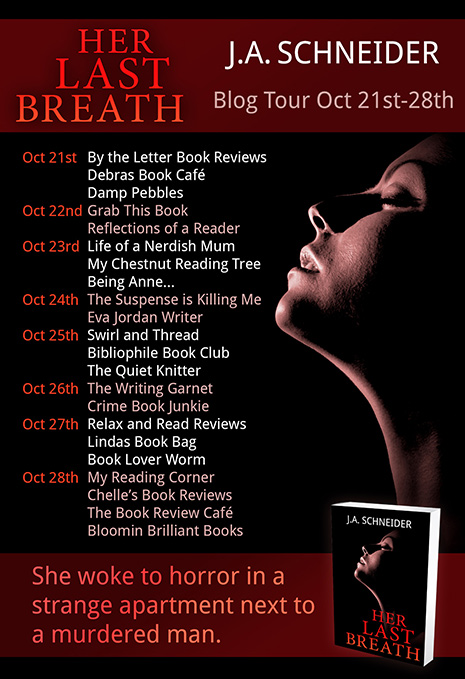
Author Interview / JA Schneider


A chilling psychological thriller about a woman caught between two men... 

Mari Gill wakes to horror in a strange apartment next to a murdered man, and can't remember the night before. Accused of murder, she feels torn between her husband, a successful defense attorney, and a mysterious, kind man who wants to help. Can she trust either of them - or even her friends? Detective Kerri Blasco battles her police bosses believing Mari is innocent...but is she?


Ira Levin (Rosemary’s Baby, The Boys From Brazil, Stepford Wives) Oh, how I re-read this amazing author – for his brevity, his astonishing ability to say so much – action & emotion - in few words. Plus, of course, his amazingly original concepts!

One of my most favorite, still-shocking, great scenes is in The Boys From Brazil, where Lieberman, the aging, sickly Nazi hunter, finally gets the chance to interview a female former wardress at Auschwitz, now in a German prison. His sister died at Auschwitz! He’s waiting, emotionally coming apart, for the woman’s lawyer to bring her from her cell…and finally, the door opens, and the lawyer leads out a small woman with “a disappointed mouth.” That’s it! The “disappointed mouth” gives the whole character – no need to describe her gray and bent, her drab uniform, surroundings etc. Imagine facing the end of your days with “a disappointed mouth.” Harrowing. The rest of that scene is beyond brilliant; ditto the rest of the book. Levin also works in humor in places where you won’t believe you’re laughing, like…that prison scene? Lieberman asks the wardress the birth date of her dead dog. Major plot point, also funny…

Other brilliant depictions are of Rosemary Woodhouse’s husband and oh so well-meaning “friends.” Years after I’ve read and re-read Rosemary’s Baby, every scene and gesture is so subtle, yet so shocking.

I aim for noon to six. Mornings are for clearing the fogged brain, going through & answering email, reading news, etc. I write sprawled with my laptop & use Word on my MacBook Air. Love the keyboard, how it just zooms.

The first draft. Starting each day with the damned proverbial blank page. I collect quotes by writers who give courage: David Baldacci’s “A writer is always terrified.” Tess Gerritsen’s “Do you have the guts to stay with it?” Stephen King’s “Flail away at the goddamn thing!!” Like that. It helps, most days.

Wrote poems & short stories as a kid. Majored in French Literature, started writing stories imitating Stendahl’s The Red and The Black. Then worked for Newsweek, wrote news by day and fiction at night. Have always been scribbling away at something…
The idea for FEAR DREAMS came when I spent time with a close friend crying, desperate that she was losing her mind. She wasn’t (she’s okay), but I got to imagining a very bright, creative woman, whose life and whole psychology is threatened after trauma. Can she hold on? The story tells how even the most rational of us can end up doubting our sanity.
I’m a compulsive reader. Reading and re-reading old favorites, including Marathon Man, another all-time great thriller, by William Goldman (who wrote Butch Cassidy and the Sundance Kid.) I do try to read “best sellers” of today, mostly psychological thrillers - but honestly, I feel that many are slow, bland; am still searching for any that have Levin’s intensity.

It it really, really hard. Accept that. Hugh Howey says it best: “Look at it as a marathon, not a sprint. My bestselling book was my eighth or ninth. As soon as it took off, the rest of my books took off with it. The idea that we can pub one title and it will catch on … your odds are better that you'll rope a unicorn.”

Also, see #3 above. Love and Luck to all…good luck roping your unicorn!!


18 Oct 2016

Book Review / Everywhere I Look by Helen Garner


Spanning fifteen years of work, Everywhere I Look is a book full of unexpected moments, sudden shafts of light, piercing intuition, flashes of anger and incidental humour. It takes us from backstage at the ballet to the trial of a woman for the murder of her newborn baby. It moves effortlessly from the significance of moving house to the pleasure of re-reading Pride and Prejudice.

Everywhere I Look includes Garner's famous and controversial essay on the insults of age, her deeply moving tribute to her mother and extracts from her diaries, which have been part of her working life for as long as she has been a writer. Everywhere I Look glows with insight. It is filled with the wisdom of life.


Published:     29th March 2016
Publisher:  Text Publishing Company
Goodreads :  Click here
Series or Stand-Alone:  Stand-Alone
Source:  Review Copy from Publisher


MY REVIEW

What I liked about this book...  Oh this book was good....   I have to admit that I had not heard of this author before but I do love reading biographies and memoirs and this one just intrigued me.  I am so happy that I read this.  Helen's humorous wit throughout this book was intriguing to read.  This book is more about little snippets of Helen's life, written at the time but collated in this book.  I loved and appreciated her honesty in certain situations and took a lot out of this book in terms of reading about her experiences and opinions in life. 

What I didn't like about this book...  If I had to be picky I would have loved the book to have had some sort of time line to it rather than jumping from one year to the next and then back a couple of years and then forward.  I think that says more about me than the actual book itself.  I am just one of those people who likes things in order and enjoys things more when they are like that.  But that is just me being picky, I enjoyed this book immensely and would not hesitate to recommend this to everyone!

In summary... 


16 Oct 2016

Book Review / The Ice Beneath Her by Camilla Grebe

For fans of Jo Nesbo and The Bridge, The Ice Beneath Her is a gripping and deeply disturbing story about love, betrayal and obsession that is impossible to put down. Fast-paced and peopled with compelling characters, it surprises at every turn as it hurtles towards an unforgettable ending with a twist you really won't see coming . . .

A young woman is found beheaded in an infamous business tycoon's marble-lined hallway.

The businessman, scandal-ridden CEO of the retail chain Clothes & More, is missing without a trace.

But who is the dead woman? And who is the brutal killer who wielded the machete?

Rewind two months earlier to meet Emma Bohman, a sales assistant for Clothes & More, whose life is turned upside down by a chance encounter with Jesper Orre. Insisting that their love affair is kept secret, he shakes Emma's world a second time when he suddenly leaves her with no explanation.

As frightening things begin to happen to Emma, she suspects Jesper is responsible. But why does he want to hurt her? And how far would he go to silence his secret lover?


Published:     27th December 2016
Publisher:  Ballantine Books
Goodreads :  Click here
Series or Stand-Alone:  Stand-Alone
Source:  Review Copy from Publisher


MY REVIEW

What I liked about this story...  In this story we follow a few characters but the one that I particularly enjoyed the most was the story of Emma Bohman.  We see her at the beginning working at Clothes & Moore, as a sales assistant, where she meets Jesper Orre; a man who has his own secrets.  From that chance meeting they start a secret affair and what follows from there are a series of events that made the story for me.  I loved the suspense build up from this character perspective.

What I didn't like about this story...  Unfortunately, for me, apart from the above, the story really lost my interest, honestly speaking.  I really loved following the story of Emma and finding out what happened next but with the addition of other character's perspectives and their own stories I just didn't find them as interesting as her story.  With this lack of interest I have to say that I was very tempted to skip those chapters just to get to the 'Emma parts'.  I didn't in the end skip parts but did wish that those parts were a bit more in pace with the story.   It was more that with the other character's parts in this story it felt there was too much description and individual character back story and not enough suspense or action that I had thought it would have.  


10 Oct 2016

Book Review / Sunrise Crossing by Jodi Thomas

Return to peaceful Crossroads, Texas, where community comes first and love thrives in the unlikeliest places… 

Yancy Grey is slowly putting his life back together after serving time for petty theft. As he rebuilds an old house, he finally has a sense of stability, but he can't stop thinking of himself as just an ex-con. Until one night, he finds a mysterious dark-haired beauty hiding in his loft. But who is she, and what secret is she protecting?

The art gallery Parker Lacey manages is her life—she has no time for friends, and certainly not lovers. But when her star artist begs Parker for help, she finds herself in a pickup truck, headed for the sleepy town of Crossroads. A truck driven by a strong, silent cowboy…

Gabe Snow has been a drifter since he left Crossroads at seventeen after a violent incident. When he accepts a job in his hometown, he'll have to decide whether he can put the worst night of his life behind him and build a future in the community that raised him.


Published:     30th August 2016
Publisher:  HQN Books
Goodreads :  Click here
Series or Stand-Alone:  Book 4, Ransom Canyon
Source:  Owned


MY REVIEW

What I loved about this story...  I cannot believe this is the last book in the Ransom Canyon (that's all that is listed on Goodreads at the moment so I am not sure if there will be more in the future but I hope there will be.....).  I have loved this series so much I can't believe it has now come to an end :-(  As with the other books, this story follows three characters.

First there is Yancy Grey, who has featured in previous stories as mostly a side character but in this book he is a main character.  We follow him settling down and meeting a mysterious lady who is hiding in a loft behind a house he is renovating for himself.  Not only is this story about that encounter and what happens next but we discover more about Yancy's family in the past and, for me, that was the best part of this story.

Next we follow Parker Lacy who heads up an art gallery.  We follow her a she protects a certain person who is in danger by letting her stay at her country house, which so happens to be in Ransom Canyon.  To make sure this person is ok, she leaves the art gallery and travels to Ransom Canyon to help her friend.  Not only is Parker's story all about that but she also meets a cowboy who interests her...  Loved both aspects of Parker's story.

Finally we have Gabe Snow.  I won't go into too much detail of Gabe's story but let's just say that his story was the most interesting to me.

What a fantastic story and an amazing end to the Ransom Canyon series (as far as I know it).  If you love romance stories this is definitely a story to pick up and get swept away with.